02 October 2026
Peptide Guide
Presented by @rylanbiif697
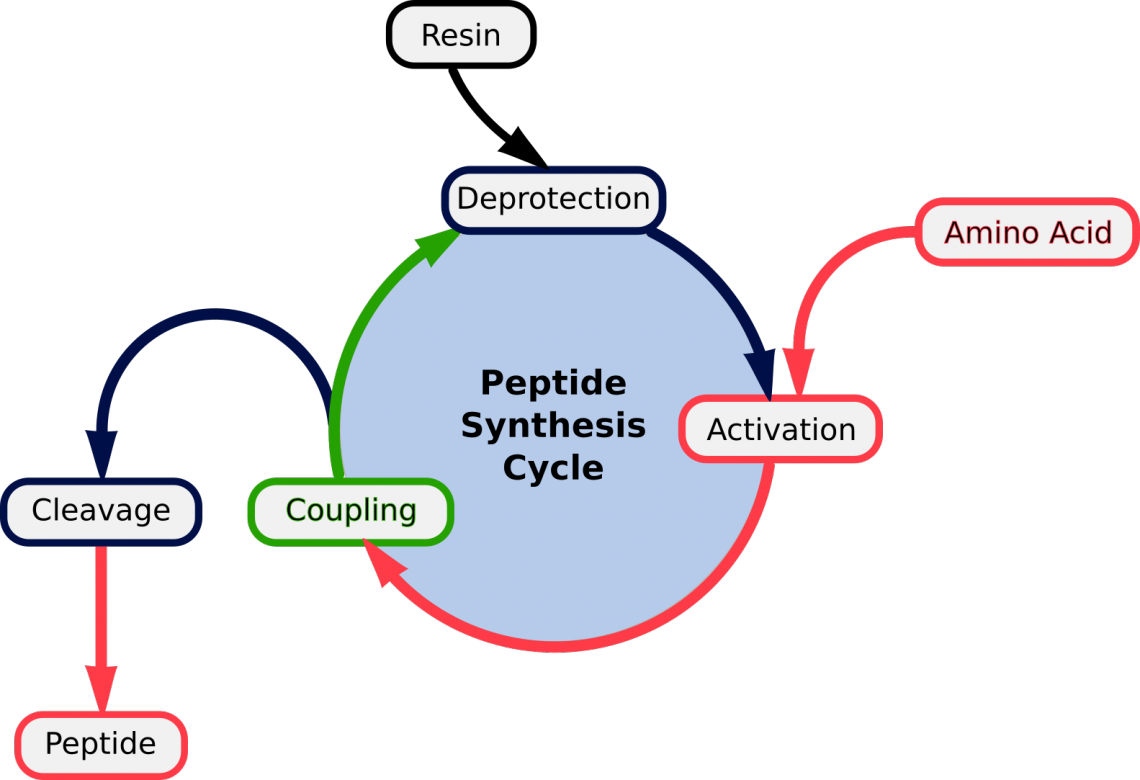
Peptide Guide A lot of lyophilized (freeze-dried) peptides continue to be stable for 2+ years when stored at -20 ° C in a sealed vial secured from light and moisture. Some very steady compounds like BPC-157 and TB-500 can last 3+ years under excellent problems. For ultra-long-term archival, -80 ° C storage can extend stability to 5+ years. Whether you're managing a college research laboratory, biotech facility, or pharmaceutical research study program, these clinically confirmed storage procedures will certainly aid preserve peptide security and research integrity. Peptide stability varies considerably based upon amino acid make-up and series. Greater temperatures lower the toughness of hydrogen bonds. All α-amino acids are uneven particles except glycine. Enantiomers differ substantially in their organic task. Fmoc- SPPS (solid-phase peptide synthesis) is the primary technique. The peptide is elongated beginning with the C-terminus to the N-terminus of the series. Repetitive Recovery Research freezing and thawing lowers stability in time. Allows duplicated vial accessibility and lowers microbial growth. Including solvent gradually is not compulsory, however it assists protect against lathering, which can reduce the dissolution process. Bring Certificates of Evaluation (COA), original labels, and purchase invoices. This evident strength loss has numerous potential reasons. Immediate cloudiness after reconstitution recommends precipitation from thermal shock or pH conflict. If you rushed temperature level equilibration, this is the most likely reason. Unfortunately, precipitated peptide rarely redissolves effectively. Although much less complicated measurements are feasible, ample qualitycontrol actions, such as those explained listed below, are required to achieve the requiredmeasurement goals. The shelf life of lyophilized peptides can range from a couple of weeks to a number of years, depending upon the storage space conditions and the features of the peptide. To make certain ideal security, it is suggested to store at reduced temperatures and stay clear of repeated freeze-thaw and light exposure. Additionally, extremely purifiedinternal requirements are vital for the successful advancement and deployment ofclinical assays in a CLIA-regulated setting. Nevertheless, crude peptides can beused for family member metrology of peptide analytes in Tier 2 assays (2 ), provided that the performance of theresulting assay is meticulously examined. Unrefined steady isotope-labeled peptides canalso work for identifying endogenous analyte, particularly in complexmatrices such as cell and growth digests.
What negates peptides?
Salicylic acid''s exfoliating activity might destabilize the peptides, diminishing their skin-repairing advantages. Recommendation: To avoid any kind of interaction, use salicylic acid and peptide items at various times. As an example, incorporate salicylic acid in your early morning regimen and peptides in your evening routine.

- Real stability will differ depending on peptide framework, dealing with, and storage space conditions.
- For certain cases, reconstituted peptide services are advised to make use of immediately following their preparation, however they might likewise be kept for future use.
- With several resources of evidence, the service life of lyophilized peptides is 2-3 weeks at room temperature.
- All PRG items are planned solely for in vitro research or more production usage.
- If your peptide develops a gel-like mass as opposed to dissolving, the concentration may be expensive.
- When taking a trip with injectable peptides, make use of a protected traveling cooler with ice packs to keep the drug chilled.
Why A Storage Method Matters For Glp-1 Reconstitution
A purity of 98% means that 98% of the product detected represents the target peptide. For study applications, pureness over 95% usually are enough. Greater purity matters most for research studies where even minor pollutants can confuse results. Some researchers use little microcentrifuge tubes for aliquots. Others favor single-dose syringes, prefilled and icy independently. The trick is never returning thawed remedy to the fridge freezer.Dealing With Certain Peptide Classifications
In practical terms, ensuring ideal lyophilized peptide storage space problems maintains both pureness (less impurities in time) and Online Peptide Store potency (higher task), prolonging valuable life span and preventing waste. Amino acid calibrants and peptide/protein QC materials must be selectedcarefully to guarantee accuracy of the measurements. Calibrants should resemble themeasurand( s) as identically as possible in both concentration and structure/form. Calibrants should be defined for purity, both natural and inorganiccontaminants, in addition to for water material. Forisotope-dilution dimensions, stable isotope-labeled inner criteria mustconsist of matrix- and exact-matched analogs of the target measurand. Insulin syringes with permanently affixed needles function best right here. The fine gauge needles, commonly gauge, cause minimal discomfort and reduce rubber stopper damages throughout withdrawal. Reconstitution procedures that preserve maximum potency. Quality control methods to confirm what you're actually working with. Understanding which deposits are most vulnerable assists you anticipate stability and select ideal storage problems. Generally, the moment for a reconstituted peptide to be saved in the refrigerator varies from a few days to a couple of weeks, relying on the peptide sequence and storage problems. If longer storage is required, lyophilized peptides can additionally be stored at -20 ° C or lower, which can remain secure for several years. The peptides are stable at space temperature however relying on the peptide and storage space conditions, this may be various. Lyophilized peptides typically keep at area temperature level for weeks to months (depending upon the peptide and its storage space). In controlled degradation research studies, usual research study peptides kept in sealed vials at area temperature level (20-25 ° C )revealed marginal degradation over day periods.